
The standard height of hand towel ring placement is 50 to 52 inches above the finished floor.1 That figure assumes a traditional 32-inch vanity. When your counter sits at 34 to 36 inches, the floor-based number stops working and the towel hangs too close to the surface. This guide covers how to measure from the floor, from the counter, and how your towel’s length changes the final position. See the overview in hand towel holders for how rings fit this hardware category.
Quick Answer
What is the standard height of a hand towel ring?
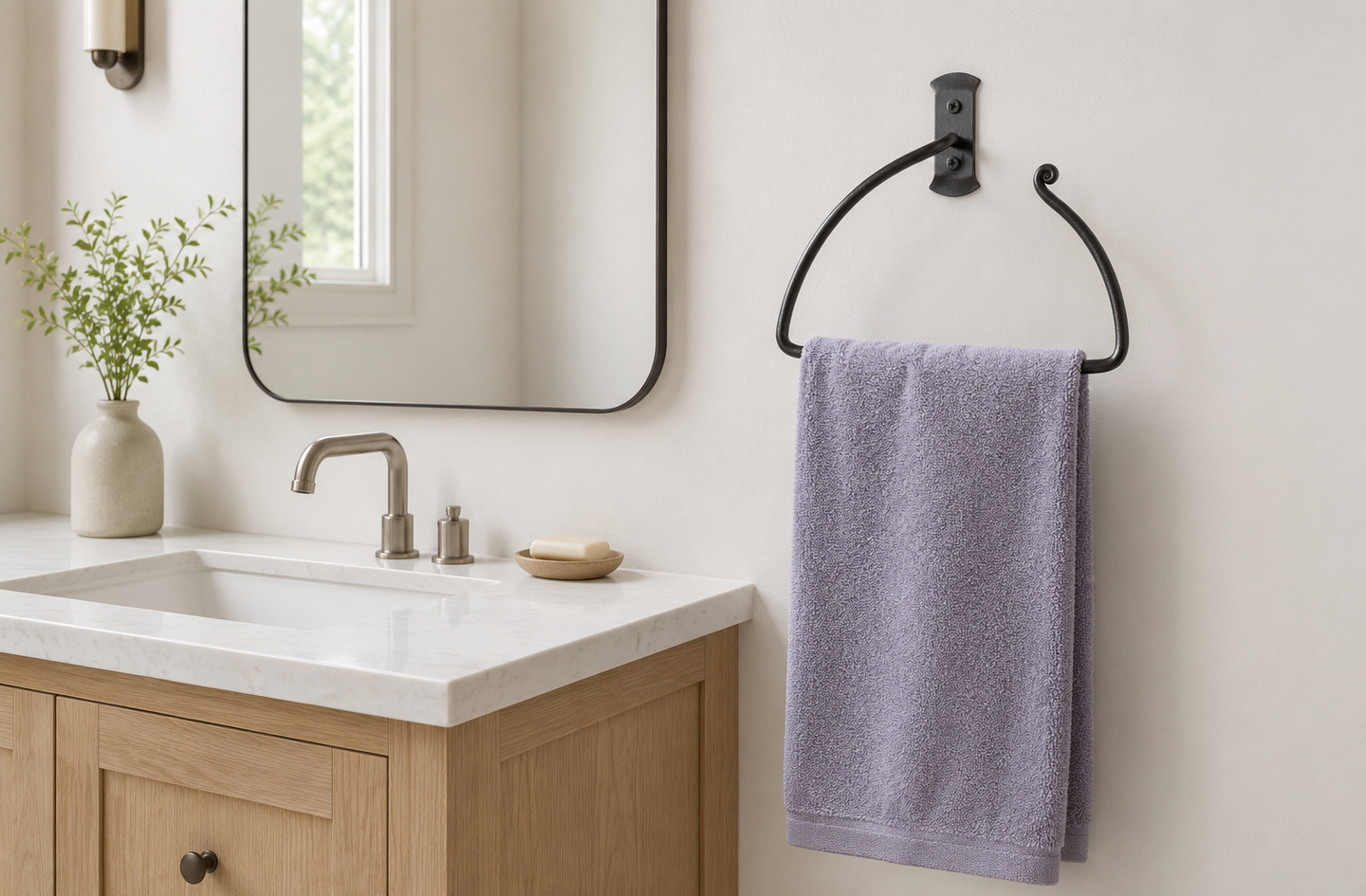
Mount the center of the ring 50 to 52 inches above the finished floor for a standard adult bathroom.1 A more reliable method: position the ring 20 to 22 inches above your vanity countertop.2 The counter-based measurement accounts for varying vanity heights and keeps a folded hand towel clear of the surface whether your counter sits at 32 or 36 inches.
Key Takeaways
- Industry standard places the ring center at 50 to 52 inches from the floor, but 20 to 22 inches above the countertop gives more reliable placement when vanity heights vary.1
- A standard 16×30-inch hand towel folded in half drapes about 10 to 12 inches below the ring center. The bottom edge should clear the counter by at least 1 to 2 inches.3
- ADA guidelines cap operable hardware at 48 inches from the floor, shifting the target for accessible and multi-user bathrooms.4
- Comfort-height vanities at 34 to 36 inches require a higher floor measurement, around 54 to 56 inches, to achieve the same counter clearance.
- Test the position before drilling: hold the ring at your target height, drape a folded towel over it, and confirm the hem clears the counter by at least one inch.
Standard Height of Hand Towel Ring from the Floor
The standard floor-based measurement for hand towel ring height places the ring center at 50 to 52 inches above the finished floor.13 Two independent sources confirm this figure, making it the most widely cited starting point for ring placement in a standard adult bathroom.
Finished floor is the surface of the completed floor after tile, hardwood, or other finish materials are installed. Measuring from the raw subfloor instead introduces a half-inch to one-inch error, enough to place the ring visibly out of position.
Measure to the center of the ring’s opening, not to the top of the bracket or the bottom edge. Mark your drill hole at the ring’s center point. Most standard hand towel ring profiles have a 3-inch diameter opening, so the drill point falls near the middle of the bracket height.
Why the Range Spans 50 to 52 Inches
The 2-inch spread exists because comfortable reach height varies by stature. For someone around 5 feet 2 inches tall, 50 inches gives a natural arm position without lifting. At 5 feet 10 inches, 52 inches feels more comfortable. A shared bathroom with mixed-height adults benefits from the midpoint: 51 inches from the finished floor.
Some sources cite 48 inches as a lower-end target for bathroom hardware. That figure reflects minimum accessibility guidance, not optimal placement for standing adults. For a fully ambulatory household, the 50 to 52 inch range produces better ergonomic results. The accessibility target of 48 inches is covered in detail in the ADA section below.
Measuring Without Reference Errors
Use a rigid tape measure, not a fabric one. Hold the start of the tape flat against the finished floor and extend it straight up the wall. At the 50 to 52 inch mark, place a light pencil mark. This is the center-of-ring target position.
Avoid measuring from the top of the baseboard. Standard baseboards sit 3 to 4 inches above the floor surface. Measuring from the baseboard top shifts the ring 3 to 4 inches higher. That places it at 53 to 56 inches from the floor, outside the optimal range for standard vanity bathrooms.
Position the ring 4 to 6 inches from the nearest edge of the sink along the wall. Closer than 4 inches and the ring interferes with faucet use. Beyond 8 inches and users drip water across the counter crossing the gap. On a side wall, center the ring on the wall space beside the sink rather than measuring off the faucet.
In a standard bathroom with a 32-inch vanity, targeting 51 inches from the finished floor puts the ring center in the ergonomic range for most adult heights.
Measuring from the Counter: The More Reliable Method
For bathroom hardware, measuring 20 to 22 inches above the vanity countertop gives a more reliable ring position than measuring from the floor alone.2 Counter heights vary between bathrooms. The floor-based measurement assumes a 32-inch vanity. When that assumption is wrong, the towel hangs at the wrong height.
A vanity countertop is the horizontal work surface of the sink cabinet, measured from the finished floor to the top of the counter surface. In practice, counter heights fall into two main ranges: standard (32 to 34 inches) and comfort height (34 to 36 inches). Comfort-height counters are now common in new construction and remodels.
The method is straightforward. Hold your tape measure flat on the counter surface and extend it up the wall. Mark at 20 to 22 inches above the counter. This mark is where the center of the ring should sit. The floor-based measurement for the same bathroom comes out automatically once you drill and mount at that mark.
The Arithmetic for Standard and Comfort-Height Vanities
Standard 32-inch counter plus 20 inches above counter equals 52 inches from the floor, right in the middle of the standard target range. Standard 34-inch counter plus 20 inches gives 54 inches from the floor.
For a 36-inch comfort-height counter, 20 inches above gives 56 inches from the floor. This is 4 to 6 inches above the standard floor-based target of 50 to 52 inches. Using the counter-based method, the arithmetic corrects itself regardless of vanity height. The towel always hangs with the same clearance above the surface.
Where to Measure from on the Counter Surface
Measure from the front edge of the countertop, not from the backsplash wall. Counters with an overhang sit 1 to 2 inches forward of the backsplash. The measurement from the front edge reflects the clearance a user actually experiences when reaching for the towel.
If the ring mounts on a side wall with no counter directly below it, the floor-based method from the previous section is the right reference. Side-wall rings over a tiled floor use the finished floor as their baseline.
When two rings sit above a double-sink vanity, keep them at the same height above the counter, not the same height from the floor. Floor-to-counter heights often differ slightly between two sink positions. Matching counter clearance keeps the visual line consistent across both rings.
The hand towel ring size and shape guide covers how ring projection from the wall affects access once the ring is at the correct height.
For any bathroom where the vanity height is uncertain, measuring 20 to 22 inches from the countertop removes the calculation error that floor-based estimates introduce when vanity heights vary.
The RTZEN Half-Circle Ring‘s mounting bracket aligns to the ring center, making it straightforward to transfer the 20-to-22-inch counter measurement directly to your drill mark.
How Towel Length Changes the Final Position
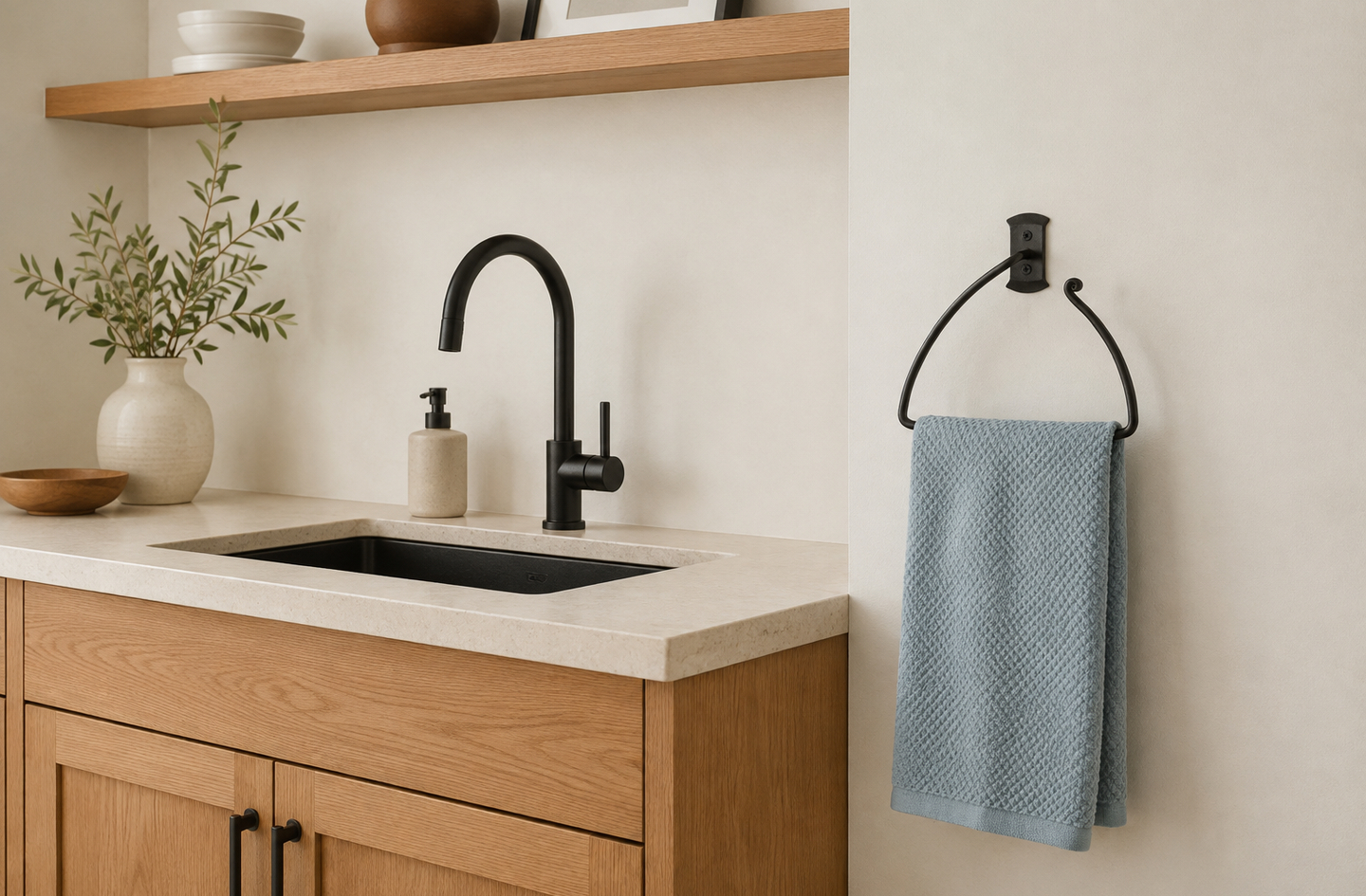
A standard 16×30-inch hand towel5 folds to about 15 inches when halved and drapes about 10 to 12 inches below the ring center. The ring height and the towel length connect directly. Mount the ring too low and the towel rests on the counter surface. Mount it too high and the ring sits at an awkward reach point for shorter users.
A hand towel ring is a wall-mounted circular or semi-circular frame designed to hold a folded hand towel within reach of a sink. The ring’s center point is the measurement target for all placement calculations.
The Full Clearance Calculation
With the ring center at 20 inches above the counter, a folded 16×30 towel hangs with its bottom edge about 8 to 10 inches above the counter surface. That satisfies the 1-to-2-inch minimum clearance and leaves room to spare.
Here is the full chain for a standard 32-inch vanity: counter at 32 inches from floor, ring center 20 inches above that, ring center at 52 inches from floor. The towel drapes 12 inches below the ring center, placing the towel bottom 8 inches above the counter. All three methods (floor target, counter target, towel clearance) confirm each other.
When the Towel Touches the Counter
If the ring center sits below 16 inches above the counter, most 16×30-inch towels touch the surface. A wet towel resting on the counter soaks the stone or wood and prevents the towel from drying between uses.
Two situations produce this problem. The first: mounting to the floor-based target of 52 inches in a 36-inch comfort-height bathroom, leaving only 16 inches of counter clearance. The second: eyeballing the position without measuring. Both are fixed by remounting at 20 to 22 inches above the counter and verifying with an actual towel draped over the ring before drilling.
Heavier and Oversized Hand Towels
Guest-quality hand towels sometimes measure 18×30 inches or larger, and they weigh more. Heavier towels drape 1 to 2 inches lower than a standard towel on the same ring. A ring at exactly 20 inches above the counter still provides enough clearance for 18×30 towels, but the margin is tighter.
For a bathroom stocked with premium-weight or oversized hand towels, mounting at 22 inches above the counter instead of 20 adds back the buffer. The practical test: hang the heaviest towel you plan to use over the ring in your hand. Hold it at your target height and check the clearance above the counter before drilling.
The ring and bar comparison covers how bar-style hardware handles heavy towels differently from ring-style hardware and when each is the better choice.
For 16×30-inch towels, a ring center 20 inches above the counter guarantees at least 8 inches of clearance. That buffer covers both standard and slightly oversized hand towels.
Adjusting for Comfort-Height Vanities
Comfort-height vanities sit at 34 to 36 inches above the finished floor, 2 to 4 inches taller than a standard vanity. That extra height requires raising the ring’s floor-based target to maintain the same counter clearance.
Comfort height, sometimes labeled “ADA height” in plumbing catalogs, refers to vanity countertops set between 34 and 36 inches above the finished floor. They have been widely adopted in new construction over the past two decades, driven by aging-in-place design principles and taller average user heights.
Why the Standard Target Fails with Comfort-Height Vanities
The 50-to-52-inch floor standard works precisely because a 32-inch counter plus 20 inches of clearance equals 52 inches. When the counter rises to 36 inches, 52 inches from the floor leaves only 16 inches of clearance above the counter. A 16×30 towel draping 12 inches below the ring center ends up only 4 inches above the surface.
Four inches of clearance is not enough. The towel rests against the backsplash and loses air circulation on the counter side, which means it stays damp. This problem is common in bathrooms remodeled with comfort-height vanities where the ring position was not updated to match.
The Correct Targets for Comfort-Height Bathrooms
For a 36-inch comfort-height counter, adding 20 inches gives 56 inches from the floor as the ring center target. For a 34-inch counter, the target is 54 inches from the floor. Neither figure is found in the standard 50-to-52-inch range, but both follow directly from the counter measurement rule applied to taller vanities.
If working from floor measurements only, use 54 to 56 inches for a comfort-height bathroom. Mark both numbers on the wall in pencil and choose the one that puts the ring at the most natural reach height for the primary users. Then verify with a folded towel before drilling.
The RTZEN Triangle Ring uses a flat wall-mount plate. A height adjustment is a single step: fill the old pilot hole, remeasure from the counter, drill the new hole at 20 inches above the counter, and remount. No part of the ring itself needs adjustment.
Comfort-height bathrooms need a ring center at 54 to 56 inches from the finished floor, not the standard 50 to 52. This shift produces the same 20-inch clearance above the counter.
ADA Reach Range and Multi-User Bathrooms
ADA accessibility guidelines cap operable hardware at 48 inches from the finished floor, which sets the ceiling for towel rings in any bathroom required to meet accessibility standards.4 For private homes without accessibility requirements, this number is a reference point rather than a mandate. It is still the right target for households where users have different reach abilities.
“The range for unobstructed reaches (15 to 48 inches) applies only to those portions of elements that are operable.”
U.S. Access Board, ADA Standards for Accessible Design, Chapter 34
The 48-inch ceiling covers the full range of operable hardware: towel rings, toilet paper holders, light switches, and faucet handles. Mounting a towel ring at 48 inches from the floor serves both standing adults who are shorter in stature and users approaching from a wheelchair or mobility device.
Heights for Children’s Bathrooms
Children’s bathrooms follow different targets based on age group. Younger children ages 5 to 8 reach most comfortably at 40 inches from the floor.3 Older children ages 9 to 12 reach comfortably at 48 inches, matching the ADA reach ceiling.4
For a bathroom shared by children under 8, placing the ring at 40 inches works well. A second ring at 50 inches serves adults in the same space. Two rings side by side on the same wall, each at a different height, solve this without requiring separate bathrooms.
Wheelchair-Accessible Bathrooms
For a bathroom designed for wheelchair users, the target drops further: 40 to 44 inches from the finished floor.3 At this height, a seated user extends a natural reach to the ring without leaning forward past their center of balance. Mount the ring 4 to 6 inches to the side of the sink so a seated user does not reach across the basin.
ADA-compliant accessible bathrooms also require clear floor space in front of fixtures and have provisions for protruding wall objects that extend into circulation paths.4 Most standard ring profiles project 3 to 4 inches, which is at or just under the threshold that triggers these protruding-object provisions. For a bathroom undergoing formal ADA compliance review, consult the U.S. Access Board guidelines for the exact clear floor space and protrusion dimensions.
A Practical Compromise for Multi-User Homes
When adults and children share one bathroom, 48 inches is the most useful single height. It satisfies the ADA ceiling for adults, reaches comfortably for children ages 9 and up, and suits shorter adults in the household. Younger children under 8 will need a step stool or a second ring lower on the wall.
For a guest bathroom that will see users of unknown heights and abilities, 48 inches is the single safest choice. It works for standing adults of average and shorter stature, and it complies with accessibility reach-range requirements without sacrificing usability for ambulatory users.
In a multi-user bathroom where stature and reach ability vary, 48 inches serves the widest range of users. No second ring needed.
Verifying the Height Before You Drill
Verify the exact ring position with the actual towel in hand before marking the wall. A tape measure confirms the number. A draped towel confirms the clearance. Both checks together prevent a remounting job.
The Hang-and-Check Method
Hold the ring against the wall at your calculated height. Drape a folded hand towel over the ring. Look at the gap between the towel’s bottom edge and the counter surface. That gap should be at least 1 to 2 inches. If the towel touches the counter or the backsplash, raise the ring 2 to 4 inches and check again before drilling.
Mark the center of the ring bracket on the wall with a pencil dot, not a full line. Then hold a level against the bracket to confirm the mounting holes will be plumb. A ring mounted even 2 degrees off level reads as visibly crooked from across the bathroom.
Common Mistakes and How to Fix Them
Eyeballing the position without measuring causes most height errors. The bathroom wall has no reference lines and visual estimation typically produces a position 3 to 5 inches off target. Always measure before marking, even when the position looks right.
Using a neighbor’s or online photo as the reference is another common source of error. A photo does not show the specific vanity height, the specific towel brand, or the specific ring size in that bathroom. Every installation requires its own measurements against the actual counter surface.
Drilling into tile without a pilot hole causes the third category of error. When a ring needs remounting after the height is wrong, the original drill holes in tile are permanent. Filling tile holes is possible but visible. Verify before drilling specifically to avoid this situation on tiled walls.
Testing Reach Before Committing
Stand at the sink in normal use position and reach for the ring while it is held in place. Check whether the motion feels natural without adjusting your elbow height. Ask anyone else who uses the bathroom to test the same reach while you hold the ring in place.
The goal is a ring position that the primary users find effortless on every use. A height that satisfies the formula on paper but requires an awkward reach in practice is the wrong height. Height guidelines are starting points. The actual body reaching for the ring is the final authority.
The hang-and-check method takes two minutes and reveals both the clearance gap and the reach comfort before a single hole goes in the wall.
Frequently Asked Questions
What is the proper height for a hand towel ring?
The standard height of hand towel ring placement sets the ring center at 50 to 52 inches above the finished floor for a standard 32-inch vanity.1 A more reliable target: mount the ring 20 to 22 inches above the countertop, which gives the correct clearance regardless of whether your vanity is standard or comfort height.
How high above the counter should a towel ring be?
Position the ring center 20 to 22 inches above the vanity countertop.2 At this height, a standard 16×30-inch hand towel drapes about 12 inches below the ring center and clears the counter surface by 8 to 10 inches. For premium-weight or oversized towels, use the 22-inch end of the range.
What height should a towel ring be in a bathroom with a comfort-height vanity?
With a 36-inch comfort-height counter, mount the ring center at 56 inches from the finished floor (36 plus 20 inches). For a 34-inch counter, the target is 54 inches. The standard 50-to-52-inch floor target leaves too little clearance when a taller vanity is in use, causing the towel to rest against the backsplash.
What is the ADA-compliant height for a bathroom towel ring?
The ADA sets 48 inches as the maximum height for operable hardware in accessible bathrooms.4 Wheelchair-accessible installations target 40 to 44 inches from the finished floor.3 In multi-user homes without formal ADA requirements, 48 inches serves the widest range of users and stature levels.
What is a good towel ring height for a children’s bathroom?
Children ages 5 to 8 reach comfortably at 40 inches from the floor. Children ages 9 to 12 use 48 inches, the same ceiling as ADA guidelines for adults.3 For a bathroom shared by adults and young children, two rings at different heights on the same wall serve both groups without needing two bathrooms.
Limitations and Edge Cases
- All measurements in this guide assume a wall-mounted ring positioned beside a standard bathroom vanity sink. Rings installed in shower recesses, above toilet tanks, or on the back of a door follow different reference points not covered here.
- Height figures and ADA standards are based on US sources (2023-2024 data). Mounting standards in the EU, UK, and other regions follow different building codes and ergonomic guidelines.
- ADA compliance for an accessible bathroom requires professional review beyond mounting height alone, including clear floor space, turning radius, and grab bar placement.
References
Methodology: every figure below comes from an independent published source and links to the page that carries it; the article is reviewed by Rami Abramson, Founder and CEO, RTZEN.
- H2ouse – Towel Ring Height and Other Fixtures: Proper Measurements, 2024.
- Designing Idea – Standard Towel Bar Height (Bathroom Design Guide), 2024.
- DG Floors – Towel Ring Height Above the Vanity Guide, 2024.
- U.S. Access Board – ADA Standards for Accessible Design, Chapter 3: Operable Parts, 2023.
- Weezie Towels – Towel Sizes: A Complete Guide, 2023.
Conclusion
The most reliable method for setting hand towel ring height is measuring 20 to 22 inches above your vanity countertop, which gives correct clearance for both standard and comfort-height vanities. The floor-based target of 50 to 52 inches works for standard bathrooms but fails when the counter rises above 32 inches. For accessible and multi-user bathrooms, 48 inches from the floor is the practical shared-use target backed by ADA reach-range guidelines.
See the overview in hand towel holders for how rings fit alongside bars, hangers, and other hand towel hardware options.